

Posted by Kate Shulga on Aug 23rd 2026
Can You Bring a Vape on a Plane: Everything You Need to Know
Flying with a vape isn't quite as simple as tossing it into your bag with your phone charger and headphones. Even a small disposable contains a lithium battery, which means airlines and aviation authorities treat it differently from ordinary personal items. Where you pack it matters, and separate bottles of vape liquid can be subject to their own security rules.
For travelers flying in the United States, the basic answer to "Can you bring a vape on a plane?" is generally yes, but there are important restrictions. Electronic cigarettes and vaping devices need to stay with you in the cabin, either in your carry-on baggage or on your person. They shouldn't go into checked luggage because lithium batteries can create a fire risk that is much harder to deal with inside an aircraft's cargo hold.
Being allowed to carry a vape doesn't mean you're allowed to use it once you're on board. FAA guidance prohibits passengers from using or charging electronic smoking devices during the flight, and travelers are expected to protect their devices against accidental activation and short circuits.
International trips require a little more homework. A vape might be acceptable under your airline's battery rules and still be restricted or prohibited by the country you're entering. The same issue can come up during a connection, so it's worth checking the rules for transit countries rather than researching only your final destination.
A useful preflight routine is to check your airline's policy, airport security requirements, battery restrictions, and the current vape laws for every country on your itinerary. Doing that before you leave home is much easier than discovering a problem at security or customs.
Can You Bring a Vape on a Plane? Carry-On, Battery, and FAA Rules
The most important thing to understand is the difference between carry-on and checked baggage. Under current U.S. aviation rules, electronic cigarettes and other lithium-battery-powered vaping devices belong in the cabin. That includes disposable vapes, vape pens, vaporizers, atomizers, and similar electronic nicotine delivery systems.
You shouldn't deliberately put a disposable vape into a suitcase that's going into the aircraft hold. Lithium-ion batteries can overheat or catch fire when they're damaged, defective, or short-circuited, and a battery incident is easier for the crew to identify and respond to when it happens in the cabin rather than inside the cargo compartment.
There's another situation that's easy to overlook. You may arrive at the gate expecting to carry your bag onto the aircraft, only to be told that it needs to be gate-checked because overhead space is limited. If that happens, remove your vape and any applicable spare lithium batteries before handing the bag over.
Can You Put a Vape in Checked Luggage?
For U.S. flights, electronic cigarettes and vaping devices shouldn't be packed in checked baggage. The fact that another battery-powered electronic device may be allowed under certain conditions doesn't mean the same rules automatically apply to a vape.
The simplest way to remember it is to keep your vape with you in the cabin. If there's any uncertainty about a particular product or battery configuration, check your airline's current baggage policy before traveling rather than relying on what happened on a previous flight.
Can You Use a Vape on a Plane?
Carrying a vape onto an aircraft and using one during the flight are two completely different things. FAA rules prohibit passengers from using or charging electronic cigarettes and vaping devices aboard the aircraft, so the device needs to remain stored while you're flying.
That includes the aircraft lavatory. Trying to take a discreet puff there isn't a workaround, and you should always follow the instructions given by the cabin crew. Wait until you've reached a location where vaping is legally permitted.
Battery Rules for Traveling With a Vape
Most disposable vape batteries are relatively small compared with the general FAA threshold for standard passenger lithium-ion batteries, but that doesn't remove the need to handle them properly. The device should be protected from accidental activation, physical damage, and short circuits during the journey.
Battery condition is particularly important. A vape with a swollen battery, badly damaged housing, unusual overheating, or another obvious defect shouldn't be taken onto an aircraft. The same caution applies to recalled or defective lithium batteries that may produce dangerous heat.
If you're carrying permitted spare lithium batteries, those also need to remain in the cabin and be appropriately protected. Exact airline requirements can be stricter than the general rules, which is another reason to check with your carrier before departure.
What About Vape Juice?
Separate bottles of e-liquid are a different issue from the vape device itself. If you're carrying them in cabin baggage, they can fall under the security rules that apply to liquids, so you'll need to follow the requirements of the airport and jurisdiction you're traveling through.
Leaks are worth planning for as well. Changes in cabin pressure can sometimes contribute to leakage from liquid-containing products, so make sure bottles are tightly closed and packed appropriately. A flight is also not the time to start dismantling or refilling a disposable vape.
International Vape Travel Rules
International travel is where the question "Can I take a vape on a plane?" stops having one simple answer. Aviation battery rules determine whether and how the device can be transported, while national laws determine whether you're actually allowed to bring, possess, or use that vape once you arrive.
Those two sets of rules don't always line up. Your airline might allow an electronic smoking device in cabin baggage while your destination places much tighter restrictions on vaping products. Some carriers can also impose their own rules beyond the general aviation requirements.
United States
For U.S. air travel, the core rule is fairly easy to remember: keep your vape in the cabin rather than checked baggage, protect it from accidental activation, and don't use or recharge it during the flight. Your airline may add further conditions, so its current policy should still be checked.
This matters particularly if you're flying with a device that has unusual battery or hardware specifications. Don't assume that understanding the general FAA rule means you've automatically satisfied every carrier-specific requirement.
Europe
There isn't one universal "Europe vape rule" that can safely be applied to every country and airline. Airport security procedures, age restrictions, import requirements, local vaping laws, and airline battery policies can differ depending on where you're going.
If your itinerary takes you through several European countries, check each relevant jurisdiction. Information from an old trip to one European destination isn't necessarily useful for another country or even for a later trip to the same place if regulations have changed.
Asia and Other Destinations With Strict Vape Laws
Some destinations have particularly restrictive rules around vaping products, making advance research even more important. Packing your vape correctly under airline battery rules doesn't automatically give you permission to take it through customs.
Transit stops deserve attention too. If your journey involves connecting through another country, check whether its rules could affect you even if you don't plan to leave the airport. Research the itinerary you're actually flying rather than focusing only on the destination printed at the end of your ticket.
Australia
Australia is a good example of why generic international vape advice can be misleading. The supplied source notes that current Australian TGA guidance provides a traveler's exemption for limited quantities of vaping goods when the applicable therapeutic-use requirements are met, while the country also maintains substantial restrictions on vaping products.
The broader lesson is more useful than memorizing one country's limits: airline permission and customs permission are not the same thing. Before an international flight, always verify current official information for the specific destination.
How to Pack a Vape for a Flight
Good packing starts before you arrive at the airport. Instead of dropping your disposable into whichever suitcase has room, decide which bag is definitely staying with you in the cabin and pack the device there.
For U.S. travel, keep the vape in your carry-on or on your person and make sure it can't accidentally activate. The device should also be protected from physical damage, and you shouldn't travel with one that has a visibly defective battery or badly damaged housing.
If your cabin bag gets gate-checked, remember to take the vape out first. It's an easy detail to forget when boarding is busy, but the baggage rule doesn't suddenly change because airline staff decided to put your carry-on in the hold.
During the flight, leave the vape stored. Don't use it and don't plug it in to charge, even if the aircraft has USB ports available at your seat. The prohibition applies regardless of how long the flight is.
If you're carrying separate bottles of e-liquid, check the applicable security requirements for liquids and pack them carefully against leakage. Don't assume that because the vape itself can travel in the cabin, every quantity or container of e-liquid will automatically be accepted.
Finally, check the airline and destination before leaving home. This is especially important internationally, where local possession or import laws may be much more restrictive than the aviation rules governing the battery.
What Happens if Airport Security Questions Your Vape?
If security personnel want to inspect the device, be straightforward about what it is. There's no benefit in trying to conceal a vape or describing it as something else, and officers may legitimately need to examine the electronic device, battery, or accompanying liquids.
Follow the instructions you're given. If an item isn't permitted, ask what options are available rather than arguing that another airport allowed the same product last time. Different jurisdictions, routes, airlines, and circumstances can produce different results.
What if Your Vape Is Confiscated?
If authorities formally take possession of an item, don't try to retrieve it unless they tell you that you can. Instead, find out why the vape was refused so you understand whether the issue involved airport security, airline policy, battery condition, customs rules, or local law.
Knowing the reason can help you avoid the same problem on another journey. One confiscation doesn't necessarily mean every vape is prohibited everywhere, just as getting through one airport successfully doesn't prove that the device will be accepted on every future trip.
What About Long Flights?
A long flight doesn't create an exception to the rule against vaping or charging a vape onboard. Whether you're in the air for two hours or twelve, the device needs to stay stored until you're somewhere its use is legally permitted.
Adults who use nicotine and are concerned about managing a long period without vaping can discuss legally appropriate alternatives with a healthcare professional before traveling. Trying to secretly use the device during the flight isn't an appropriate solution.
Disposable Vapes Travelers May Compare
Disposable vapes now range from relatively compact 5K devices to large 40K and 55K products with more sophisticated hardware. Those differences can matter when you're choosing something for everyday use or thinking about portability, but they don't override airline and destination rules.
Packspod 5000

Packspod 5000 sits toward the more compact end of this particular selection. Compared with today's 25K, 40K, and 55K models, a smaller device can be easier to organize and protect in cabin baggage when portability matters more than having the largest advertised capacity.
Before taking one on a flight, check the exact battery and product information on the current packaging. A compact vape still contains electronic components and potentially a lithium battery, so its smaller physical size doesn't exempt it from applicable aviation rules.
Tyson 2.0 Legend 30K
Tyson 2.0 Legend 30K moves into a considerably higher advertised capacity class. For an adult comparing devices for a longer trip, that may sound convenient because it potentially reduces the need to carry several smaller products.
The 30K designation doesn't change the basic U.S. baggage requirement, though. A lithium-battery-powered electronic smoking device still belongs in the cabin rather than checked luggage, and the airline's own policy should be verified before you travel.
UWELL Gabriel BF8000
UWELL Gabriel BF8000 occupies a middle ground between smaller traditional disposables and the increasingly common 20K-plus devices. That can make it interesting to adults who want a balance between portability and advertised longevity.
For travel, focus on the exact device rather than assuming that familiarity with the UWELL name tells you everything you need to know. Check the battery details, make sure the hardware is in good condition, and pack it so that accidental activation isn't possible.
Adjust MyRusher 40K
Adjust MyRusher 40K belongs to the newer generation of higher-capacity devices where adjustable features can play a larger role. Those controls may be useful in everyday use, but they also make it worth checking the device carefully before packing.
Make sure the vape can't accidentally activate while it's stored. Once you're on the aircraft, leave the controls alone and keep the device unused and uncharged for the duration of the flight.
Cloud Nurdz x FUMI 55K
With its 55K designation, Cloud Nurdz x FUMI 55K sits at the highest-capacity end of this particular group. Adults choosing a product in this category may care more about potential longevity and staying with one flavor for longer than they would with a traditional 5K disposable.
For air travel, however, the impressive puff number doesn't change the battery rules. Verify the current hardware specifications, battery condition, airline policy, and destination regulations before packing it.
BC5000
BC5000 represents the more familiar compact disposable format. Compared with the increasingly large capacity numbers appearing on newer products, its smaller profile can be appealing when simple portability is the priority.
Physical size shouldn't be confused with an exemption from aviation requirements. If the BC5000 configuration you're carrying contains a lithium battery and qualifies as an electronic smoking device, the relevant cabin-baggage restrictions still apply.
Geek Bar Pulse 2 25K
Geek Bar Pulse 2 25K comes from a newer, more feature-oriented generation of disposable hardware. Compared with early basic disposables, modern Pulse-family devices put more emphasis on interface design and higher advertised capacity.
Before flying, give the device a quick inspection and make sure the housing and battery appear to be in good condition. It should also be packed so that it can't accidentally activate while sitting in your carry-on.
Hulk Hogan's Hulkamania & Hollywood 8000
Hulk Hogan's Hulkamania & Hollywood 8000 sits in the 8K advertised puff category and has distinctive licensed branding. That may make the device visually different from many conventional disposables, but branding doesn't change the way aviation authorities classify the underlying electronic product.
Pack it according to the rules that apply to electronic smoking devices and lithium batteries. For an international trip, also confirm that the product can legally be brought into the destination rather than assuming that legal purchase at home guarantees legal import abroad.
iJoy Bar SD22000
iJoy Bar SD22000 falls into the 22K category, placing it between smaller 5K-9K products and much larger 40K-plus devices. For a trip, that advertised capacity may be one factor to consider alongside the physical size and the flavor you want to keep using.
Battery condition and destination rules are ultimately more important than the puff number. Check the specifications of the exact iJoy device you're carrying rather than assuming that every product from the manufacturer uses identical hardware.
RAZ TN9000
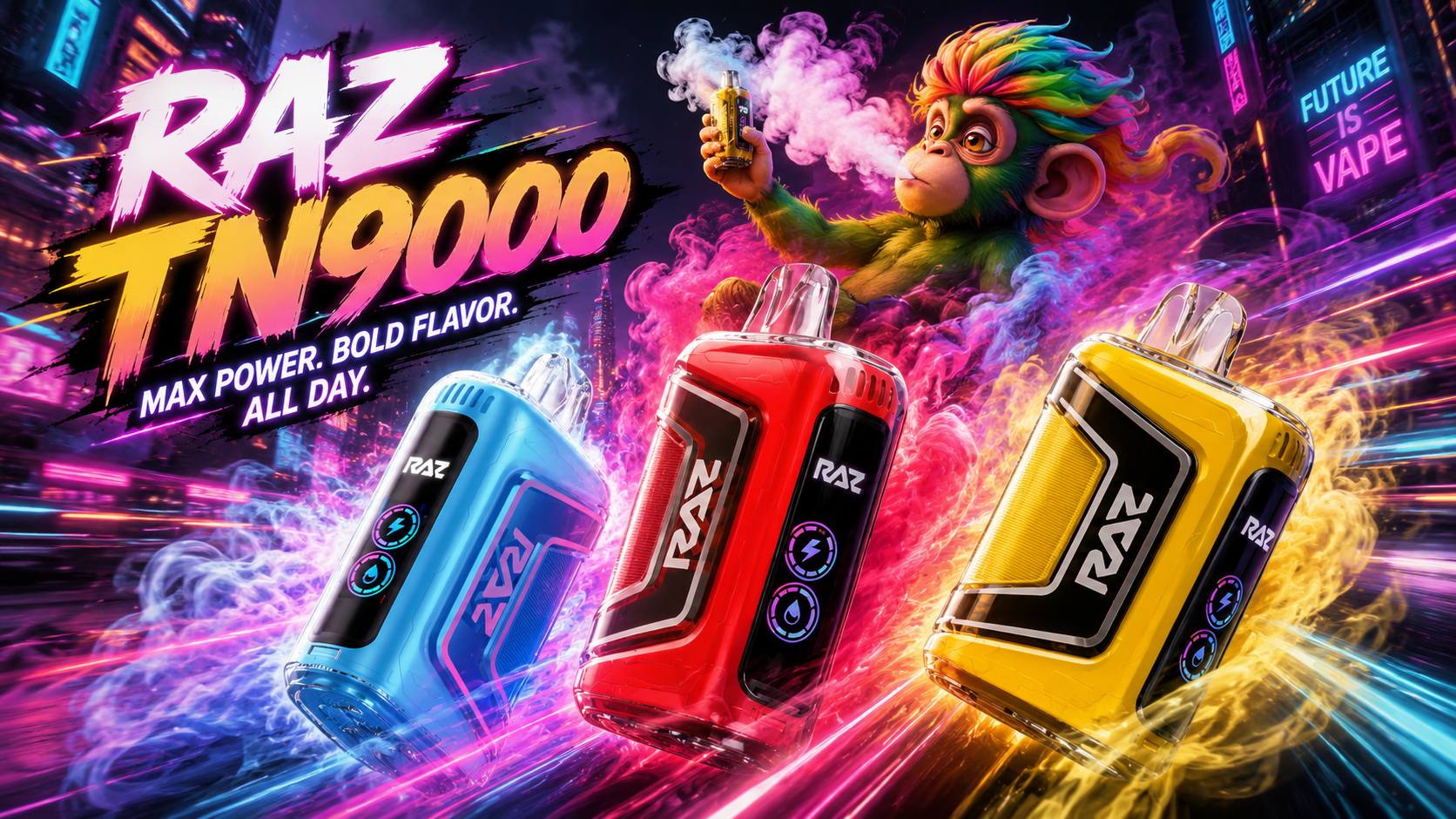
RAZ TN9000 provides another middle-range option with its 9K-class format. For adults who don't necessarily want to travel with a 25K, 40K, or 55K product, that may offer a more moderate balance between capacity and device size.
The same travel rules still apply. Keep the vape where required by the airline, protect it against accidental activation, and confirm destination legality before an international journey. A product being legally sold where you live doesn't automatically mean you can carry it across another country's border.
Choosing a Travel-Friendly Disposable Vape
Shopping for a vape before traveling involves a slightly different set of priorities from choosing one for everyday use. Portability becomes more important because the device needs to fit safely into your cabin baggage without being crushed or accidentally activated.
Trip length can influence the capacity you choose as well. A smaller vape may be easier to carry, while a higher-capacity product could reduce the number of devices you feel you need for a longer journey. That doesn't mean carrying several large disposables is automatically permitted, since airlines and destinations can have their own quantity restrictions.
Battery condition should come before puff count in any travel decision. A vape with a swollen battery, damaged housing, unexplained overheating, or another obvious fault shouldn't be taken onto an aircraft simply because it still works.
Flavor and nicotine strength are personal considerations, but legality comes first. There's little point choosing the perfect flavor for a vacation if the product can't legally be imported into the country you're visiting.
When comparing options, look at the physical dimensions, battery specifications and condition, advertised capacity, nicotine strength, flavor, and whether the device can be protected from accidental activation. Then check those factors against the airline's policy and the import, possession, and vaping laws that apply throughout your itinerary.
At VaporPuffs, adults can compare very different device categories before making that decision. Packspod 5000, BC5000, UWELL Gabriel BF8000, RAZ TN9000, iJoy Bar SD22000, Geek Bar Pulse 2 25K, Tyson 2.0 Legend 30K, Adjust MyRusher 40K, and Cloud Nurdz x FUMI 55K cover a broad range of advertised capacities and formats.
If you're shopping specifically for an upcoming trip, check the destination rules before placing the order. Being able to purchase a product legally online doesn't establish that customs authorities in another country will allow you to bring it across the border.
Can You Take a Vape on a Plane? Final Travel Advice
So, can you bring a vape on a plane? For U.S. air travel, the general answer is yes, provided the device is carried in the cabin rather than checked baggage and is properly protected against accidental activation and short circuits. It must remain unused and uncharged throughout the flight.
Remember the gate-check situation too. If your carry-on unexpectedly has to go into the cargo hold, take the vape and any applicable spare lithium batteries out before handing the bag to airline staff.
International trips require more preparation because aviation rules are only one part of the picture. Airline restrictions, local regulations, customs rules, routes, and destination laws can all affect whether you're allowed to travel with a particular vaping product.
A sensible routine before every trip is to check the airline's current policy, review official airport or aviation-security guidance, verify the laws of your destination and any transit countries, and inspect the device itself. Once everything checks out, pack it safely in the appropriate cabin baggage and leave it unused and uncharged while you're on the aircraft.
Don't rely entirely on travel advice from an old trip, a forum post, or someone who flew the same route months ago. Vape regulations can change, particularly when you're crossing international borders, and enforcement can differ between jurisdictions.
For adult VaporPuffs customers, the legal check should therefore come before choosing between a compact 5K device and a high-capacity 40K or 55K model. Once you know the product is permitted on your route and at your destination, you can compare size, battery design, advertised capacity, flavor, nicotine strength, and the other features that actually matter to you.
A vape can be perfectly acceptable as a carry-on item on one journey and create a customs problem on another. Knowing the difference before you reach the airport is what makes traveling with one much less stressful.
Frequently Asked Questions
Can you bring a vape on a plane?
Yes, travelers can generally bring a vape on a plane in the United States, but it must stay in carry-on baggage or on their person. Electronic cigarettes and disposable vapes should not be placed in checked luggage because they contain lithium batteries. The device should also be protected against accidental activation and physical damage during the trip. Vaping and charging the device onboard the aircraft are not permitted. International travelers should also verify airline rules and the laws of their destination before packing a vape.
Can you put a disposable vape in checked luggage?
No, disposable vapes and other electronic smoking devices should not be packed in checked baggage under current U.S. aviation rules. Their lithium batteries create a fire risk that is easier for crew members to manage when the device remains in the cabin. If your carry-on bag is gate-checked, remove the vape before handing the bag to airline staff. Keep the device protected so it cannot activate accidentally or become damaged. Airline policies may be stricter, so checking the carrier's baggage rules before departure is still recommended.
Can you vape or charge a vape during a flight?
No, passengers should not use or charge vaping devices aboard an aircraft. Permission to carry a vape in cabin baggage does not permit vaping during the flight. The device should remain safely stored and protected against accidental activation for the entire journey. Charging a vape from a seat outlet, USB port, or power bank onboard is also prohibited under U.S. aviation guidance. Wait until you reach a location where both vaping and charging are legally permitted.
How should I pack a vape for air travel?
Place the vape in your carry-on baggage or keep it with you rather than packing it in a checked suitcase. Make sure the device is switched off or otherwise protected against accidental activation if its design allows this. Keep it away from objects that could damage the housing, charging port, or battery. Do not travel with a vape that is swollen, leaking significantly, unusually hot, or visibly damaged. If you also carry bottled e-liquid, check the applicable airport security rules for liquids before departure.
Can you bring vape juice on a plane?
Vape juice may generally be carried subject to the same cabin-liquid restrictions that apply to other liquids at the relevant airport. Bottles should be securely closed and packed to reduce the chance of leakage caused by movement or pressure changes. Larger quantities may need different handling depending on security rules and the country involved. Carrying e-liquid does not automatically mean you are allowed to import or possess it at your destination. Always check both airport security requirements and local vaping laws before traveling internationally.
Can you take a vape on an international flight?
You may be allowed to carry a vape on the aircraft, but international travel requires more research than a domestic trip. Airline battery rules, airport security requirements, customs laws, and national vaping regulations can all differ. Some destinations restrict or prohibit the importation, possession, or use of vaping products even when airlines allow them in cabin baggage. Transit countries can matter as well, particularly on itineraries that require customs or security screening during a connection. Check official government and airline information for every relevant country before departure.
What should I do if airport security confiscates my vape?
Follow the instructions of airport security or customs officers rather than trying to conceal or retrieve the device without permission. Ask why the vape is not permitted so you understand whether the issue involves battery condition, airline policy, airport security, or local law. Rules can differ between countries and airports, so an item permitted on a previous trip may not be allowed on the current one. If surrender is required, comply with the instructions provided by the authority handling the screening. Researching current airline and destination rules before traveling can reduce the likelihood of this situation.
Which disposable vape is better for travel?
A travel-friendly disposable vape should be chosen according to legal requirements first, followed by size, battery condition, capacity, and personal preferences. Compact products such as BC5000, Packspod 5000, or RAZ TN9000 may be easier to store than very large high-capacity devices, but size does not change the carry-on rule. Larger options such as Geek Bar Pulse 2 25K, Tyson 2.0 Legend 30K, Adjust MyRusher 40K, and Cloud Nurdz x FUMI 55K may provide more advertised capacity but can also be physically larger. Check the exact battery specifications, condition, and airline policy before choosing a device for a trip. Adult shoppers can compare current disposable vape models and specifications at VaporPuffs before ordering.